Central Uplands of Germany (Deutsche Mittelgebirge): environmental friendliness of the ski resorts

Most environmentally friendly ski resorts in the German low mountain ranges - most eco-friendly ski resorts Central Uplands of Germany (Deutsche Mittelgebirge)


32 test reports

Best rating:
5 out of 5 stars
Evaluated by Skiresort.info, the world's largest evaluation and test portal for ski resorts.
Click here for rating process info


Central Uplands of Germany (Deutsche Mittelgebirge): most eco-friendly ski resorts

1-32 out of 32 ski resorts
Test result: 5 out of 5 stars
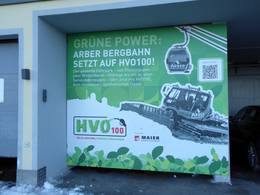
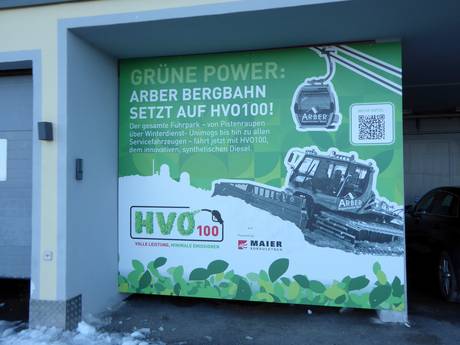
On the roof of the Arber mountain station, the highest solar power plant in Eastern Bavaria produces… more

Test result: 4 out of 5 stars
Gentle tourism is practiced, and the slopes are only opened when there is sufficient snow. more

Test result: 4 out of 5 stars
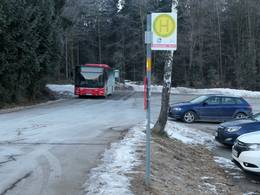
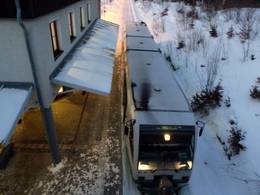
The ski resort has a direct railway connection. It is forbidden to leave the ski slopes and to ski in… more

Test result: 4 out of 5 stars
Gentle tourism is practiced. The lift is only operated when there is sufficient snow. more

Test result: 4 out of 5 stars
The slope is covered with artificial snow and opened when there is enough snow. The lift is powered by… more

Test result: 4 out of 5 stars
The quartz sand hill was artificially created many years ago, so the natural environment is not… more

Test result: 4 out of 5 stars
Gentle tourism is practiced here. Renewable energy is generated with photovoltaic systems on several… more

Test result: 4 out of 5 stars
This ski resort is so small that it really doesn't bother anyone. For the residents of Neunkirchen, it… more

Test result: 3 out of 5 stars
The annual energy consumption is equivalent to that of a large administrative building. The entire ski… more

Test result: 3 out of 5 stars
FIS environmental rules for winter sports enthusiasts are posted. more

Test result: 3 out of 5 stars
They practice gentle tourism. Getting there by public transport is difficult. more

Test result: 3 out of 5 stars
Soft tourism is practiced. Getting there by public transport is difficult. more

Test result: 3 out of 5 stars
Due to its small size, the ecological footprint is low. As an offer primarily for the local… more

Test result: 3 out of 5 stars
Gentle tourism is practiced at Pröller. Getting there by public transport is difficult. more

Test result: 3 out of 5 stars
The northern slopes of the Ettelsberg are designated as an FFH area (protected areas for nature and… more

Test result: 3 out of 5 stars
Gentle tourism is practiced here. Getting there by public transport is difficult. more

Test result: 3 out of 5 stars
The Sahnehang is located in the Kahler Asten nature reserve. However, since skiing has been taking… more

Test result: 3 out of 5 stars
The Hunau cannot be reached by public transport. However, a transfer service from the center of… more

Test result: 3 out of 5 stars
The mountain meadows around Altastenberg are designated as an FFH area (Fauna-Flora-Habitat). The… more

Test result: 3 out of 5 stars
The grass cover is carefully tended and maintained, as snow is rare and heavy snowfall even rarer.… more

Test result: 3 out of 5 stars
Owner Josef Stinn is a farmer by profession and manages the land of the ski area himself, so he makes… more

Test result: 3 out of 5 stars
The ecological footprint of such a small area is naturally low, and thanks to the snowmaking system,… more

Test result: 3 out of 5 stars
Forest areas are closed to winter sports enthusiasts, and the FIS environmental rules are highlighted… more

Test result: 3 out of 5 stars
A 5,000 square meter photovoltaic system supplies "green" electricity to the grid in Winterberg all… more

Test result: 3 out of 5 stars
The Postwiese is an FFH area (FFH stands for Fauna = animal life, Flora = plant life, and Habitat =… more

Test result: 2 out of 5 stars
The lift is rarely in operation, and crowds of visitors are unheard of—bad for the cash register, but… more
1-32 out of 32 ski resorts